
5.2.0
What did we learn?
During this journey of research and writing, each of us learned many facts- sometimes new, sometimes deepening existing personal knowledge.
5.2.1
BOB the Biologist
Life’s basics
Biology covers more than two billion years of evolution. Porges postulates a radical change in the appearance of mammals. On the contrary, I see continuity — which resonates with Darwin's concept of progressive change. Life as we know it requires two primary things: a membrane to create a closed space and genetic material to copy itself. As evolution progressed, everything became more complex. However, the same basic organization remained: an organized cellular space that repairs and replicates itself. Humans are no different. Modern biology shows us how similar all living things are, regardless of culture.
Saving energy
All living things have one essential goal: the survival of the species. This requires food and reproduction. Our world is divided into two classes: predators and prey. A race for progress began long ago, leaving only the fittest to survive. Adapting to changing conditions (heat or cold, rain or drought) is crucial. The game is about catching prey, converting food into energy, and storing it. For herbivores, plants are prey. Survival is primarily about avoiding predators. To win or survive the chase, reaction speed and instant acceleration require an adapted physiology — for predator and prey. Once the chase is over, the organism must calm down to avoid wasting precious energy. Low-energy states alternate with high-energy states. Always. Early in evolution, nature selected various hormones and neurotransmitters for this purpose. Some are activating, such as adrenaline (epinephrine), corticoids, dopamine, and glutamate. Others are inhibitory, such as vagal acetylcholine or GABA. Although they are antagonistic, they all work together.
Life vs. non-life
Plain matter follows a gradient from high energy (hot, fast) to low energy (cold, slow). This process is passive and dictated by the second law of thermodynamics, which states that entropy in a closed system tends to increase over time.
Unlike simple matter, life actively keeps a balance known as homeostasis and operates within a narrow temperature range. Through self-regulation and enzymatic processes, living organisms maintain a state of low entropy and high order.
Life introduces a third energy level between the extremes of high and low energy states. It suggests that life is not just a passive participant in the universe, but a creative process that temporarily counters the trend of increasing entropy.
This view is consistent with some fundamental principles of biology and thermodynamics:
Homeostasis: Living organisms regulate their internal environment to maintain a stable, constant state essential for survival.
Enzymatic engineering: Enzymes are biological catalysts that efficiently accelerate complex biochemical processes at moderate temperatures.
Entropy and Life: Life on Earth is a unique exception in a universe that tends toward increasing entropy. It represents a localized decrease in entropy that converts burning solar energy into food.
5.2.2
Alice the Color Artist
The power of colors
Let's add color to Bob's energy gradient! I go with my intuition — it is not hard science. Disagreement is welcome. As explained earlier, the color code chosen by the Porges is questionable. The PVT map deals with mortal threats. However, only 6% of the population (USA) suffers from PTSD, leaving 94% with other problems. Just living in the urban jungle can be hard enough. Equating levels of critical arousal to supposed evolutionary steps (phylogeny), the PVT picks red to code immobility and yellow for mobility. While logical from a polyvagal perspective, it's highly counterintuitive from a bioenergetics perspective.
Using colors to represent different activation levels is not a concept limited to biology. It's a principle that extends to other scientific disciplines, including nuclear physics (electrons), chemistry, and physiology (e.g., movement, heartbeat, or breathing). This universality of color representation makes adopting color in digital art (RGB, red, green, blue) a practical choice. Scientific imaging systems, such as neuroimaging, mostly follow these conventions- red for high-activity states and blue for low-activity states.
Each color in our code carries symbolic weight.
Red is associated with heat, danger, revolution (flag), passion, love (red flowers and hearts), eroticism (red quarter), disruption, and high activity. It commands attention and signifies intensity. In our context, it represents high energy.
Green is the ecologist's color. It represents saving energy and the planet—being sensible. It also represents hope. Green is healthy yet a bit boring. You may think of prairies with cows, green leaves, spinach, and lettuce. But life loves green: “Nature” thrives in temperate temperatures, far from burning deserts and ice-covered wastes.
Blue is cold, no doubt. It's the traditional, wise, educated color of royalists and nationalists. It's also a nostalgic color (“I've got the blues”). In jazz and blues, musicians use a “blue note” to indicate a change in mood — from major to minor. In 1959, Miles Davis released his seminal album “Kind of Blue,” widely regarded as one of the greatest jazz records of all time. “Birth of the Cool,” in blue letters on the cover, had been released two years earlier. Miles Davis offered a powerful counterpoint to the frenetic bebop and free jazz. Coolness, chilling out, slowing down — this tendency has survived.
5.2.3
Ben the Contemplative
Dare to stand still!
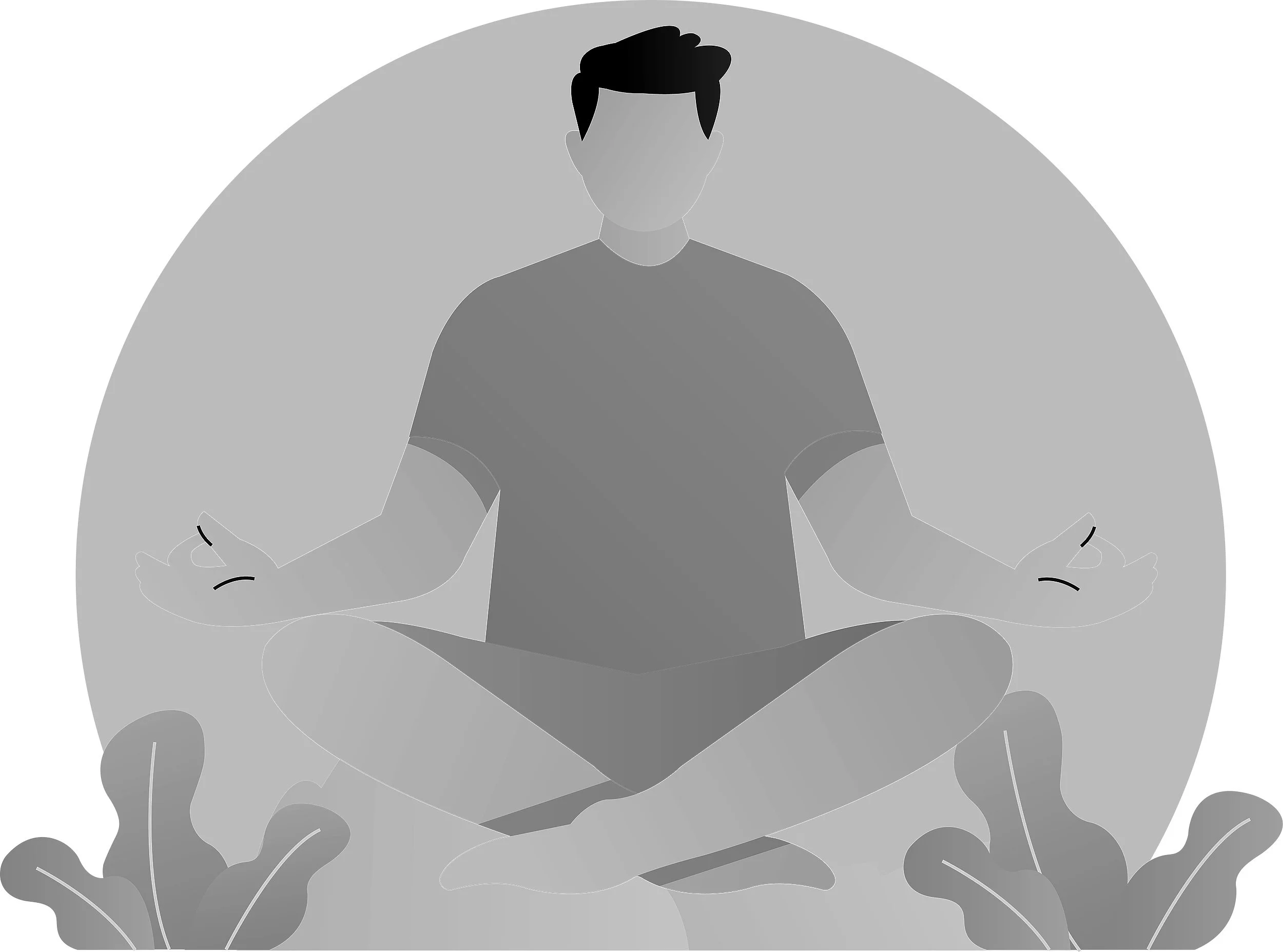
When I heard about the Polyvagal Theory around 2015, I immediately thought it would solve all my problems. It was logical, scientific, and exciting. Freud was no longer the optimal framework for psychotherapy, and PVT was built around psychotraumatology and the “animal model”: fight-flight-freezing. So I started to integrate the Polyvagal Principle into my practice as a psychotrauma therapist, which seemed relatively easy to start. However, none of the “polyvagal” exercises, from breathing to self-soothing, were new to me. “Polyvagal” was a new way of packaging old techniques. After 2–3 years, I became uncomfortable for two reasons. I had been doing daily sitting sessions for years — mindfulness, meditation, or yoga. It became a regular part of my life. Along with focus, stillness is at the core of meditation. So why would the PVT demonize immobility?
From vertical to horizontal
In my work with victims, I do a lot of visualization and body work. They are typically in agitation, anger, impatience, or exhaustion. In the past, I would routinely “inject” energy into the system and bring them into a zone of mobility and strength so that they could gain strength and later land in the social space. However, this logic doesn't work with a particular group: burnout patients. For them, the avoidance of any effort is obligatory. Social space is too energetically demanding. Later, I discovered that some chronic pain problems also require the “cold”. Finally, some severely traumatized patients often choose to hide in the therapeutic process. Confronting the perpetrators is not an option. Learning from Alice from the “blue room” was very helpful.
The polyvagal pyramid became increasingly false to me as I learned to move from one state to another, privately and professionally, without any phylogenetic connotation. So, I moved more and more from a vertical to a horizontal model. At this time, I was contacted by Alice, who had done extensive research in the scientific literature to better understand brainstem anatomy. As more of a family man who valued social connections, it was a challenge to meet someone who enjoyed solitude. But I learned a great deal from her. We both rejected a hierarchical model. Adopting her color code made my work clearer and easier to explain. Meeting Bob gave me logic.
5.2.4
Sam the Biker
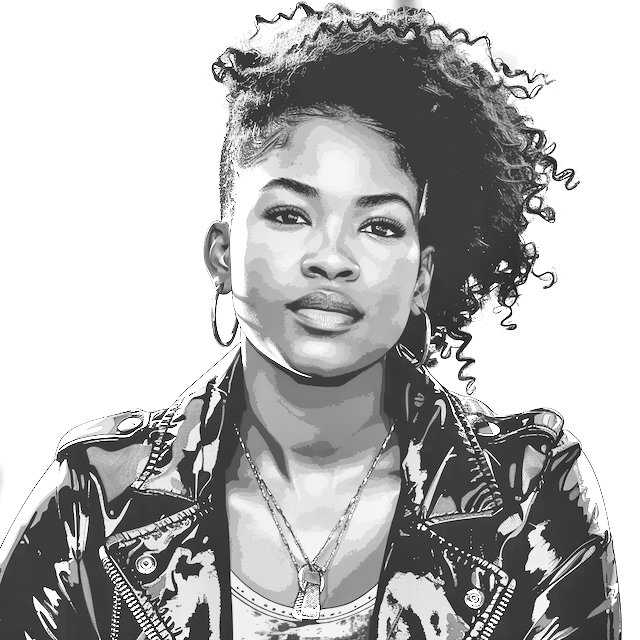
Let's Kick the Ride!
Earlier, Bob introduced the energy, Alice the colors, and Ben the deep blue. I bring the RED. It was unlikely that I would meet the team, especially not through Mr. Long-legged Couch Potato. Well, it's not quite like that. Ben is intellectually radically honest, courageous, and tenacious. I like that! But, damn, we have a long way to go, Ben and I, before we catch up on speed, power, risk, cold showers, and guns. Spending my childhood in difficult circumstances could be a strong argument for the PVT: to declare: “She hasn't learned how to socialize; she's stuck in the false alarm mindset.” I see the point, but I disagree. Growing up in a hostile environment made me discover the beauty of self-reliance and self-sufficiency. Nobody was nice to me back then, so I had to be nice to myself to survive. It worked out pretty well. I also discovered a way to appreciate life in its raw form. So I decided to join the “soft” team (Alice, Ben, and Bob) and share a bit of my life with you, the readers.
Through an intense exchange with Bob, I discovered an essential piece of scientific knowledge about activities I have long practiced: fighting makes me strong. As 007 so laconically puts it: “I like a challenge.”
Sexy Sweat
PVT somehow shames “adrenaline junkies” like me. Fortunately, while the soldier's spirit is fading worldwide — movies have done much to show the ugly face of war — exercise has become a must for young and old in the last decade. The number of citizens jogging through our streets is growing. In today’s cities, cycling enjoys widespread popularity. YouTube is full of beautiful women shaking colossal ropes, lifting weights, or passing by, leaning on the handlebars of their road bikes. A few decades ago, women were prohibited from exercising or playing sports. Promoters, sponsors, and athletes now combine aesthetics (fashion, architecture, events) and competitive spirit to make sports addictive and sexy. Reading the Red Bulletin or binging on YouTube, TikTok, Instagram, or Pinterest, we are immersed in a world of muscles, competition, challenges, tips, and hacks to improve our scores. In all beauty!
Hormesis
Why do we seek pain and competition? This is a recurring question for all challengers- yet they run, jump, and ride! We value things more when we have to fight for them. As Mark Manson writes in The subtle art of not giving a fuck (2016), “Life is about solving problems.”
With this project, I discovered a biological justification for this attitude. It was great to learn about the critical role of the sympathetic system in strengthening our immune system and how the dorsal vagus optimizes our cardiovascular efficiency! We need to stop fearing adrenaline and cortisol. Preaching by example and thanks to YouTube, Wim Hof has popularized hormesis (self-boosting). Guys, jump in the cold, breathe, and enjoy!

>> to the next chapter The Icelandic Workshop