
6.3.0
Colors Say More Than Words
This final chapter explores how an RGB color code helps us explain the Energy States Model.
6.3.1
Communication, Colors, and Energy States
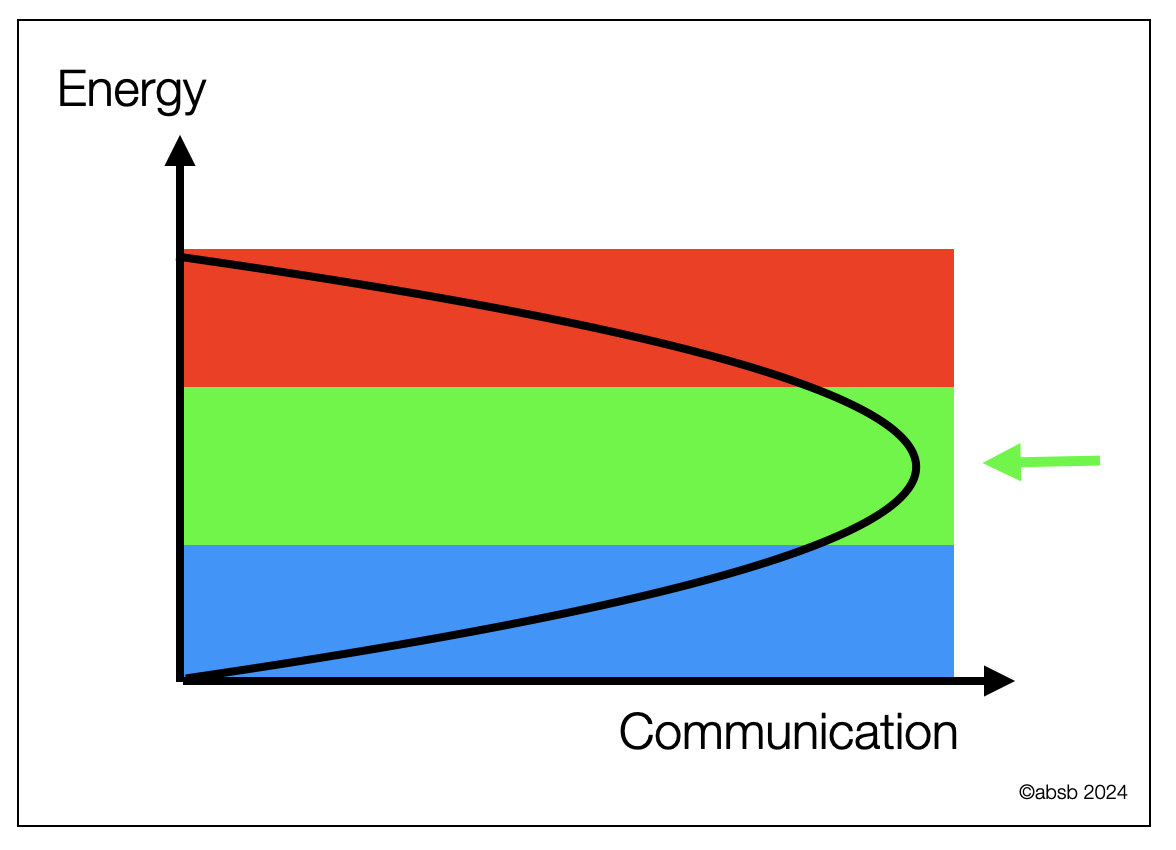
Most of the social communication takes place in the green area (medium energy level): see the green arrow.
Imagine three friends out for a jog. As long as the pace is manageable, they chat and enjoy each other's company. But when they tackle a steep hill or pick up the pace, their focus shifts to physical exertion, and the conversation fades into the background. After a hard run, they sit quietly, catching their breath and recovering from the exertion. It's a familiar scene, right?
These scenarios are not unique to these three girls. They illustrate three energetic levels characterized by specific behaviors (running, sitting, lying) and a distinct pattern of communication.
Medium energy: talking
High energy: focus and effort. The greater the effort, the fewer words are exchanged.
Low energy: rest, stillness, silence.
Communication requires brain resources. This is why any profession that relies heavily on verbal exchange, such as psychotherapists or receptionists, can be exhausting. Too much talking can also be distracting.
Chatty drivers often drive slowly, which can frustrate other car drivers behind them.
Gourmets savoring exquisite dishes in a remarkable restaurant set aside their phones and pause their conversations to immerse in the experience fully.

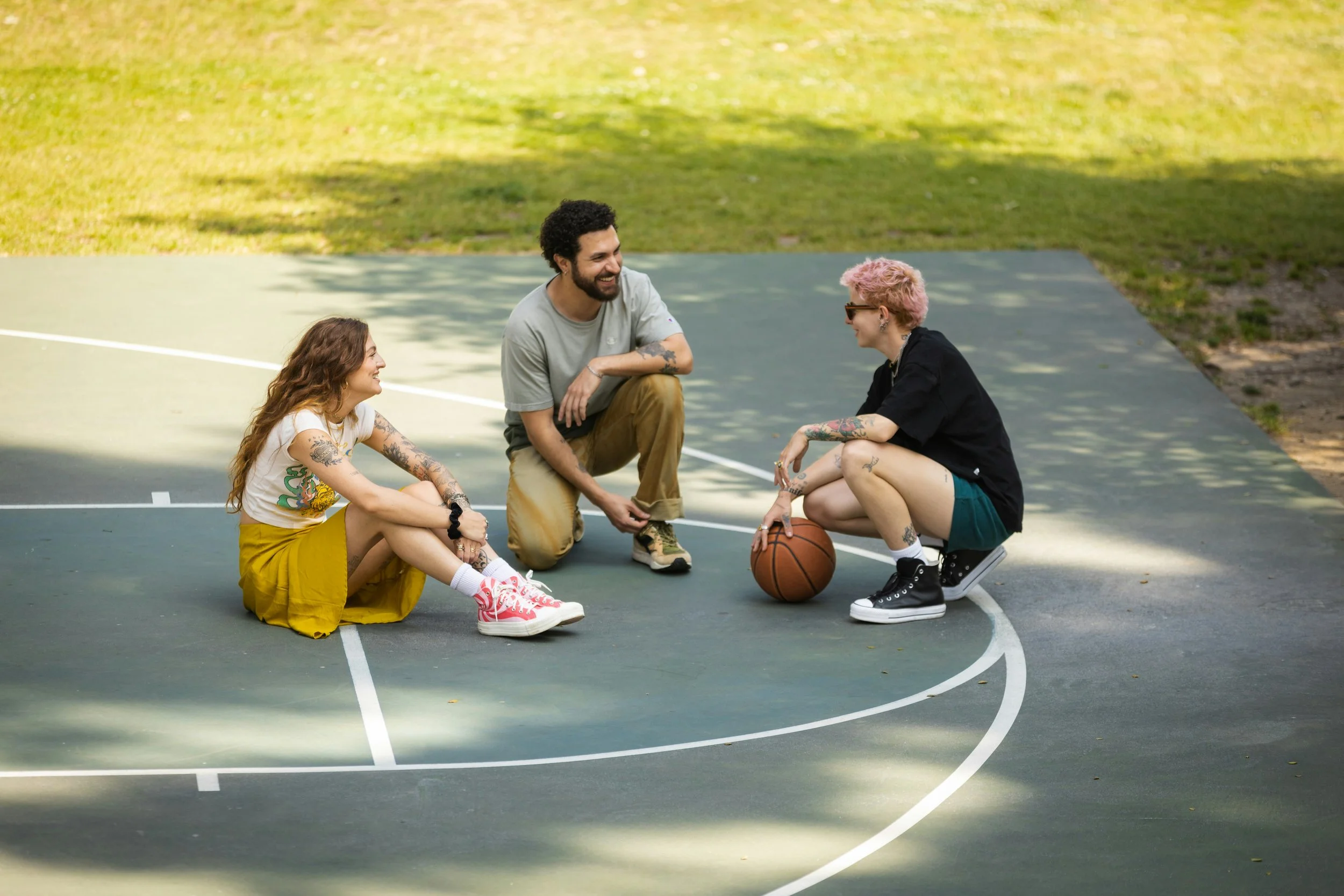

Talking while running is hard. Pause = time to chill. After running to the limit, everyone rests — speechless.
6.3.2
Blue Zone
Nutritionists have invented the concept of "blue zones": places where people live longer than elsewhere. While research on longevity focuses on diet and social quality of life, we see that these blue zones thrive outside the urban jungle-mainly in the mountains or on an island (Okinawa, Sardinia, or Ikaria)-with less information and a slower pace-more blue time. Watch Live to 100: Secrets of the Blue Zones by Dan Buettner on Netflix.
Alternate states
Our bodies naturally crave resting states with lower blood pressure, blood sugar, insulin levels, and muscle tone. This is where we can make lifestyle choices. What we eat, believe, feel, and think, as well as our exercise habits, all play a fundamental role in creating these states. We have already seen that short, intense exercise is an excellent way to increase HVR and slow the heart rate. Red and blue complement each other. The more we exercise, the more we relax.
Immobility
In the valence system that I presented, immobility can have negative and positive effects. Negative immobility can manifest as depression or traumatic freezing, while positive immobility can be experienced during activities such as meditation, siesta, or contemplation. The PAG (periaqueductal gray matter) is the primary orchestrator of these immobility states, and its influence can lead to either type of immobility depending on the context, which is primarily determined in the higher parts of the brain (telencephalon). Understanding these different types of immobility is a key to unlocking the potential of our health and wellness and empowering us with knowledge.

Burnout and Blue Healing
Burnout is a growing problem for our industrial civilization, costing billions annually. While new technologies try to speed everything up, some processes remain resistant. Just as we can't (or shouldn't) speed up pregnancy, we can't force psychological healing. Exhaustion from years of overwork calls for a break - a total break. Sick leave is a good start, but most of the time it is not enough. People also need to learn to get rid of toxic relationships. But sometimes even that is not enough. They need to drastically reduce their social interaction. This is how they eventually connect with themselves and learn to feel their emotional needs. By reducing the energetic cost, they develop a great sense of what is too much. Often, this reduction in social engagement is permanent, as they learn to say no and to choose how, where, and how much energy they are willing to spend - a lesson in humility rather than an empowering process. One day, this wise strategy will bring them satisfaction and peace. From there, they may be ready to make an effort or take on a job.
6.3.3
Green Zone

Green Feast
If you like Korean dramas, you may have noticed the importance of food. In the series, this comes as an explosion of joy while eating, drinking, and laughing, releasing the narrative after several stressful episodes. This celebration of life is reminiscent of the paintings of Breughel or Renoir. At this moment of material abundance and sharing, the DVMN and NTS (DVC) are fully active, pleasing the palate, facilitating harmonious digestion, and providing eventual satiety. In most cultures, food and drink are an essential part of social and official events: religious holidays, weddings (“eat, drink, and be married!”), funerals, or the signing of a business contract.
In addition to the energy cost of digestion, a meal is also an effort if you have to cook instead of just sitting and being served.
Saving energy
Blue and green are both energy-saving strategies. While the former reduces expenses through less activity or immobility, the latter uses tricks and hacks. Think of Odysseus, the first anti-war king in history: after years of fierce, armed battles, he invented the famous Trojan Horse, using cunning to end the siege of Troy quickly. Similarly, the invention of the wheel, the printing press, the steam engine, the telegraph, and the telephone saved a lot of time and energy. Unfortunately, because humans are immensely greedy, there is a race for improvement, trying to achieve more each year (e.g., speed, yield, or data volume). Progress forces engineers to surpass their results and invent even better technologies to compensate for this increase in demand. Industrial creativity is green gold.
Biologically, we see how planet Earth has managed to hack solar energy, which plants — thanks to chlorophyll - convert into chemical energy (ATP). Animals and humans eat plants directly (herbivores) or indirectly (carnivores).
6.3.4
Too much Green, too much Social?
Becoming soft and overinformed
In prehistoric times, life must have been hard for humans. No meal without hunting with stones or spears! Later, civilization never stopped making our lives more comfortable. Now our meals are pre-cooked. We have refrigerators, electric stoves, bicycles, cars, and computers. The temperature in our house is about 20° C or 70° F most of the time. We avoid the extremes at all costs. Everything is “medium.” There is no need to take up arms anymore: thanks to the game console, we can be fighters without getting hurt. For updates on distant real wars, we consult the “media”! The disadvantage of this is twofold:
Protected from exertion, we must exercise artificially (e.g., in a gym) to avoid cardiovascular and weight problems. Fitness comes at a special price and is no longer accessible to everyone.
We are constantly bombarded with useless information. Breaks in our minds are rare. Media fasting retreats are all the rage. Moreover, this craving for information creates a massive energy expenditure to keep the servers running.
The “green zone,” once a symbol of comfort and balance, is no longer so idyllic. In bustling cities, many people seek solace in isolation and meditation to distance themselves from the constant social buzz (“social media fasting”).
The energy required to transmit information has decreased drastically over the last century. On the downside, the amount of information — including photos of smiling babies, exciting vacations, and cute cats — has increased significantly, leading to mental saturation. The number one complaint of burnout patients is the amount of e-mail at work. A second common complaint is the obligation to be available day and night. The third is social activities: a must if you don't want to be rejected by the community as an asocial member.
Autism, hypersensitivity, and structural dissociation
In the RGB color code, green remains for a mid-energetic level and social engagement. With a positive valence, it remains for conviviality (“happy together”) and social exchange. With a negative valence, on the other hand, green expresses social constraints and agreements — adaptation of the individual to the group. This is particularly strong in two psychological profiles:
Autistic people and people with ADHD adopt a social “masking” that is often exhausting for them. Instead of saying whatever comes to mind, stimming (hand flapping, rocking, spinning, or repeating certain sounds or phrases), or zooming (ADHD moving around very quickly, restlessly, or hastily), they must BEHAVE. (Reference: www.medium.com; keywords: autism, ADHD). With this behavior, much of their zest for life and creativity is lost.
According to Structural Dissociation (Van der Hart, 2007), the ANP (apparently normal part of the personality) is the socially adapted part. When seeking professional help, the ANP brings the patient to the therapist's office. It tries to build a trusting relationship while the other parts (EP's) remain hostile or suspicious. However, he usually lacks energy. Moreover, despite its goodwill, it tends to ignore, fear, or despise the EPS. Therefore, the primary cause of dissociation seems to be in the green, not the opposite. Similarly, patients who “seem” to live a “normal” life (with a job and friends) while being emotionally dissociated remain in the green zone — conserving energy and socially adjusted. Yet, they often lack energy.
So, we should question the utopian polyvagal view of collective security.
6.3.5
Structural Dissociation Theory
Why has PVT attracted structural dissociation experts? Van der Hart, Nijenhuis, and Steele (van der Hart, 2006) built their theory around fault lines, dividing the personality into different parts: the Apparently Normal Part (ANP) and the Emotional Parts (EP). In secondary dissociation, a new division appears between two types of EP: aggressive (mobile) vs. submissive (immobile) emotional parts. At first glance, this model corresponds perfectly to the three levels of the PVT. Readers need to understand, however, that Structural Dissociation Theory (SDT) doesn't suggest a naive dichotomy between social, agreeable, and empathetic parts vs. asocial, savage, and aggressive parts. The socially adapted part (ANP) certainly brings the client to the therapist. However, it often lacks the necessary empathy for the suffering emotional parts. It doesn't want them to exist. It feels constantly threatened from the outside (society and possible predators) and from the inside. (emotional parts). The ANP is also generally powerless and avoidant. We are in shallow water here. That's why the three-layered PVT does not overlap with the SDT. The “ventral” is not identical to the ANP, nor are the “sympathetic” and “dorsal” with aggressive and submissive EPs.
The PVT is built around the perspective of the victim, not the predator. Peter Levine is clever in that he sometimes switches perspectives when treating trauma. How does a lion feel about attacking a weak antelope? Probably great. Easy job.
Similarly, the aggressive EP (internalized predator) doesn't suffer. The primary threat comes from the “nice” therapist who tries to protect the ANP and challenge the internal organization. The submissive part is often in a state of fear, which is sympathetic arousal. Remember, the dorsal vagus stimulates digestion, which is blocked during a life-threatening situation. Finally, it's hard to imagine a phylogenetic change every time a person with DID moves from one state to another.
As noted above, the field of structural dissociation is far too complex to allow a theory like the PVT to be applied to clinical psychotraumatology.
Can the Energy States Model provide what the “structuralists” seek? Perhaps. Interestingly, authors such as Reinders, Schlumpf, and Nijenhuis (Reinders, 2006, 2014, 2019, 2021) (Schlumpf, 2014) (Simone, 2012) have observed that the different parts often differ in metabolism. The ANP is low to medium energetic. Aggressive EPs can be full of energy, while submissive EPs tend to be quiet — and, therefore, low-energetic. Still, we shouldn't create fixed portraits — as polyvagal supporters typically do — because parts of the personality can take many forms. Childish parts can also be very persistent, using their suffering and needs as leverage. They can keep the therapist on his toes.
Diagram: In this highly simplified view, based on the work of van der Hart, Nijenhuis, and Steele (2006) and Nijenhuis (2014), we see how different parts relate to different energy levels. Freezing combines immobility (blue) and sympathetic excitation (red). N.B. In reality, the parts are much more intertwined.

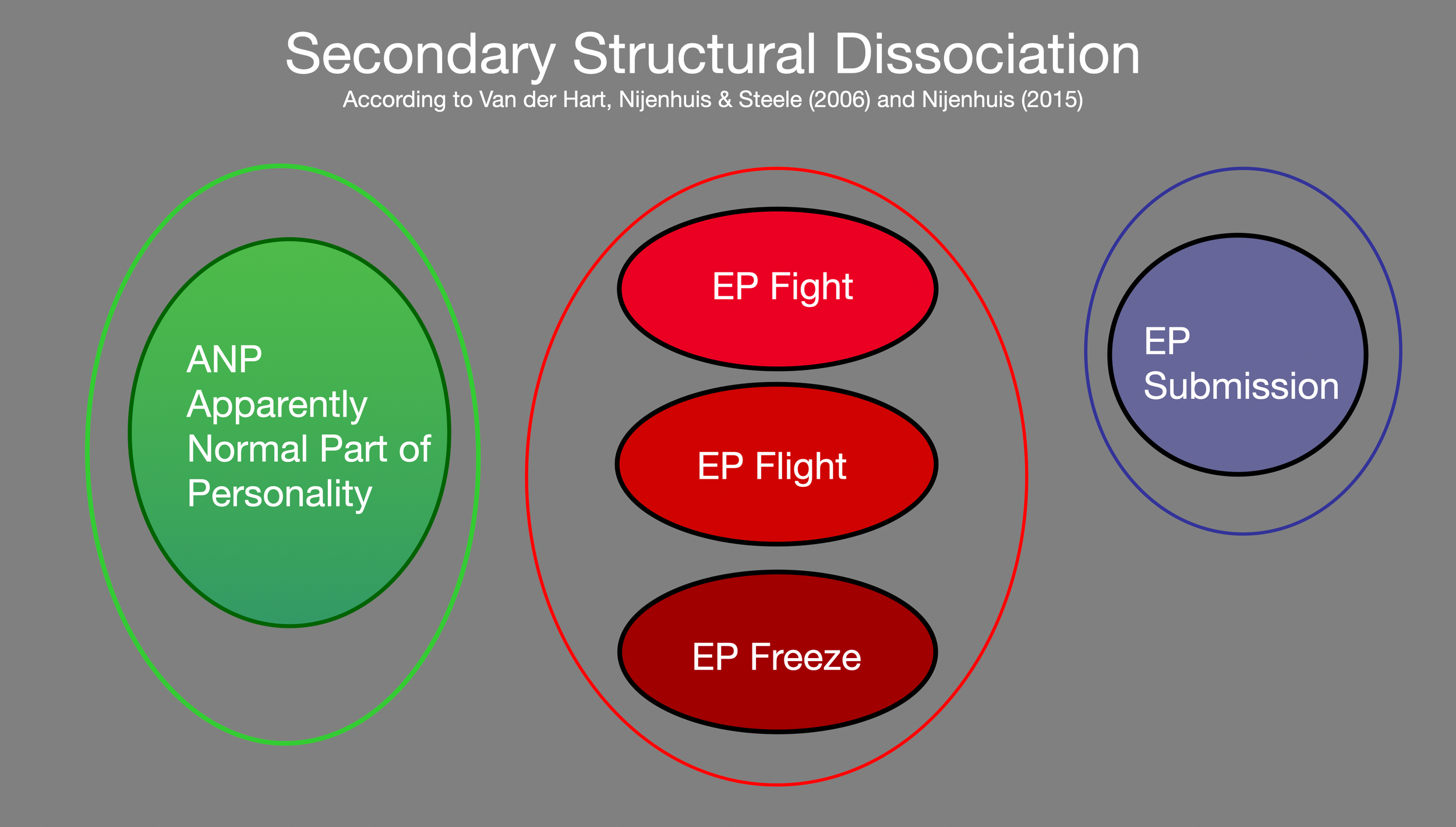


In DID (Dissociative Identity Disorder), each Personality Part (PP) has a different character and energy state. The Apparently Normal PP (ANP) has a low to medium energy level because it strives for normality and social adjustment at the expense of emotional integration. The reader must understand the oversimplification here. PPs don't fully follow this energetic dynamic.

Emotional parts (EP) can be aggressive (toward other people and parts of the system). They have a lot of energy and are dominant.


Emotional parts can also be submissive and lacking in energy. Many parts are “children” — submissive and hidden, but sometimes tyrannical and manipulative.
6.3.6
Threat vs. Energy
Beyond threat
Following Cannon, generations of physiologists have defined the sympathetic system in terms of threat: fight or flight. We define it as the physiological state of movement, arousal, or effort. It can exist with or without threat. Instead, we refer to it as challenge. The sympathetic system is engaged whether you are standing up, running to catch the bus, cycling, swimming, making love, or climbing a hill. The vagal inhibition of the pacemakers in the heart is not enough to raise the heart rate above 90 or 100-and even the slightest deep inspiration recruits adrenergic circuits. Earlier authors (Maling, 1966)(Langer, 1984) have described the essential adaptive function of the sympathetic system to exercise. There is no resolution here — no emergency or threat.
At the other end of the energetic gradient we find deactivation, rest, and peace. Far from the effort and high energy expenditure, crucial repair and growth processes are taking place. They aren't related to a threat either, they are physiological.
Ignoring the polyvagal trilogy (vagal, sympathetic, and dorsal), most physiologists have a dualistic view, contrasting ergotropic and trophotropic systems (Gellhorn, 1970). This description includes the autonomic and somatic (e.g., muscle) systems. It also overlaps — from a metabolic point of view — with catabolic (energy expenditure) vs. anabolic (building up) phenomena. Threat or evolution plays a minor role in the dualistic, as the two systems are complementary, not hierarchical.
Low and high metabolism don't necessarily reflect threat levels
By viewing all physiological processes from a pathological psychological standpoint (an instrumental fallacy), the PVT is overly restrictive. As described by Berntson, Cacioppo, and Grossman (2007), the PVT creates an inference in the form of: “if Φ, then Ψ” (if physiological, then psychological). The PVT assumes that the psychological “ladder” (safety, threat, terror) is linked to the physiological “ladder”: an inescapable threat automatically leads to a hypometabolic state. As Nijenhuis (2015) explains, the PVT doesn't distinguish between freezing states (essentially sympathetic) and tonic immobilization. The logical error here is to create blocks instead of articulating responses along more parameters.
Mobilization = sympathetic = escapable threat
Immobilization = "dorsal vagal” = inescapable threat
Cardiovascular, psychological, and motor parameters play separately to create specific responses.
In PVT, threat is the measure of everything
6.3.7
Psychotherapy and Polyvagal Theory
Is PVT a good model for a therapeutic session?
Many therapists are looking for ways to adapt PVT to their therapeutic work. Ben reports a fascinating phenomenon in a previous chapter (Icelandic Workshop). During several sessions with clients (patients), the hierarchical polyvagal tower flattened out, transforming into three parallel spaces — instead of overlapping. Depending on the situation, clients evolved from left to right or vice versa, using the resources of each space (immobilization — energetic — social). Clients moved from one state to another with a striking coherence of physiological, behavioral, and psychological manifestations. This led him to a significant realization that:
Movement and anger are the keys to therapeutic transformation (as proclaimed by countless therapists, from Wilhelm Reich to Peter Levine).
Immobilization is, in many cases, a resource state (e.g., burnout).
Friendly communication isn't always the best way to regain your space. Victims need to learn to be more assertive and forceful.
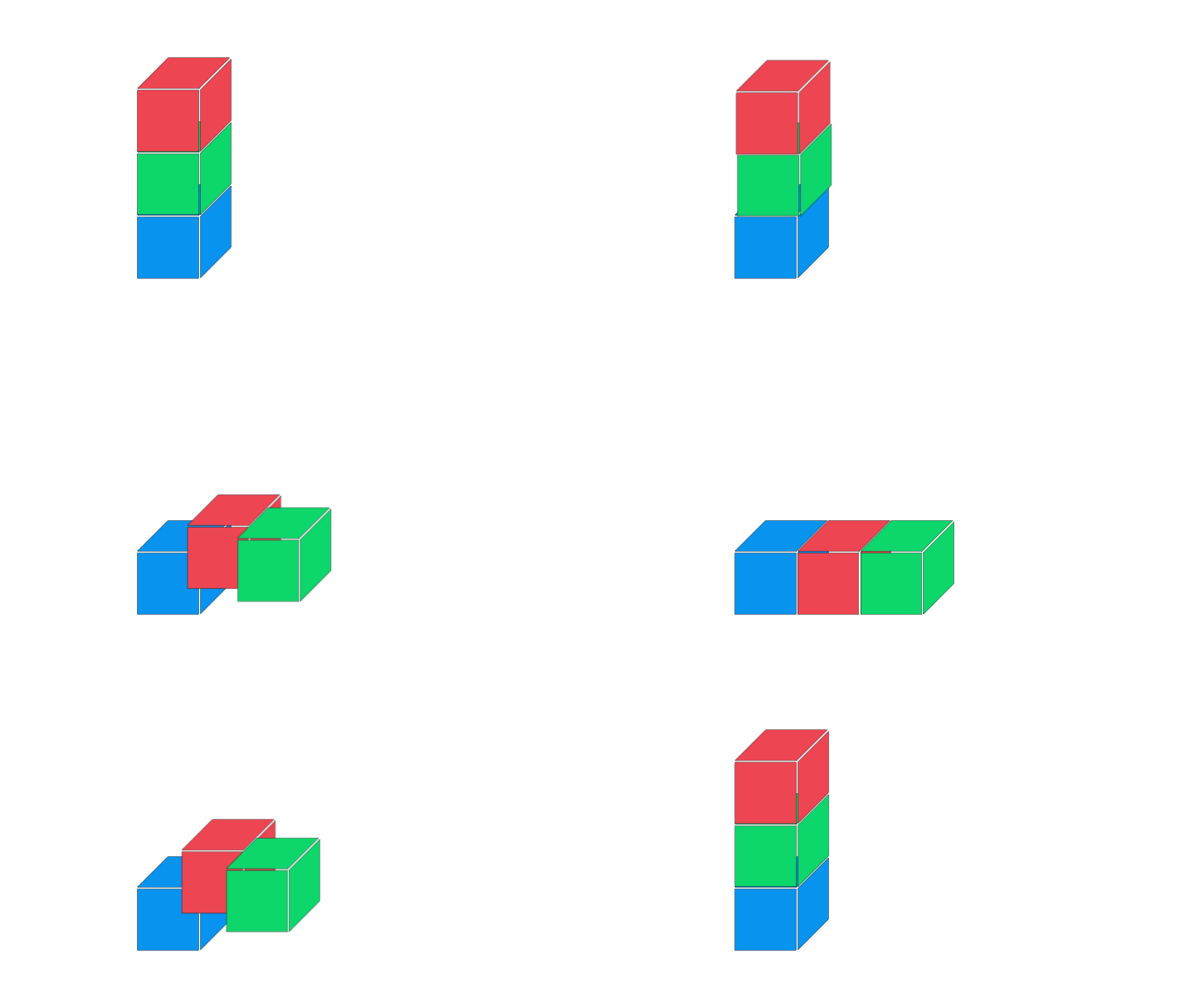
Movement first
During a psychotherapy session — and this is particularly visible in a brief intervention (e.g., EMDR, SE, or EFT) — we often observe an initial state of inhibition. The client may be silent and withdrawn, with arms crossed and looking down. Through movements (eyes, tapping, etc.), the therapist “injects” energy into the system. Frequently, intense emotions, such as anger, will emerge. Scenes of struggle, flight, or change of place are described. Finally, the client meets allies — socialization. In his therapeutic work, Peter Levine (Waking the Tiger) uses movement throughout to help the client regain control and power. While this three-step process is recurring, we also observe sequences of other states, e.g., starting from a neutral state and moving to an energetic state. Instead of seeking more energy, exhausted clients allow themselves to discover a healing place of rest and stillness. Therefore, we have moved more and more from the polyvagal creed — “all you need is social contact” — to a variable strategy.
For many clients and patients, security doesn't come from their social interactions but begins with psychological and physical empowerment. Exercise and cold water can be very beneficial. Others have found a cure for chronic psychosomatic ailments through deep states of hypnosis (Esdaile coma). These practical observations led us to question and reject the PVT long before we could find support in the scientific literature through a great deal of academic research.
As Porges proudly proclaims, the PVT replaces the classical dualistic perspective with the Polyvagal Trilogy. We go a different way. While retaining the idea of a triadic model, we replace “polyvagal” with a non-hierarchical “orthovagal” model. This shift in perspective has significant implications for our understanding and practice of therapy.
6.3.8
Colors of the Cell

In developing the Energy Tristate Model, with the help of colors, I was curious to see if it would fit into the biological framework and how we could apply color to cellular reality in a heuristic and playful way. This may be quite a stretch, though!
Metabolism and Storage of Genetic Information
Before real life appeared on Earth, atoms formed various molecules. Some were nucleic acids, which are very resistant to change. RNA had a dual function in the so-called RNA world: it stored genetic information and catalyze chemical reactions—just like the protein-based enzymes that came later. Enzymes allow biochemical processes at a much lower activation energy level and facilitate transformations.
Life diverged in three directions in its first stage: bacteria, archaea, and eukaryotes. The latter organisms have a nucleus with a double membrane that protects the inner compartment. Inside, DNA has replaced RNA as the primary keeper of genetic information. This makes eukaryotes more stable than prokaryotes (e.g., bacteria) but less versatile. Protein-based enzymes have also replaced RNA as catalytic factors.
In the next crucial step, the first eukaryotes engulfed high-energy bacteria, which became part of the eukaryotic cell as organelles: the mitochondria. These serve as energy plants. They also possess a modest genetic material transmitted only by the mother. The primary function of mitochondria is to produce ATP, the energy currency of life. ATP is present at all levels of transformation and movement. Without ATP, nothing moves in the biological world. Therefore, considering the ET model, we can consider ATP and mitochondria to be the essence of activation. Muscles are extremely rich in mitochondria.

This diagram shows the three main components of a eukaryotic cell. Can we use our color code here?
In red, the mitochondria as “energy plants”. They are sources of energy (ATP) produced by oxidation — a dangerous process — in high-security compartments.
In green, the membrane is a dynamic platform that allows signaling and exchange through specific channels. We add the enzymatic systems that allow metabolism at moderate temperatures. To illustrate the mesotropic concept (see previous sections), membranes and enzymatic systems maintain an energetic balance (homeostasis) and a dynamic exchange of information.
In blue, the nucleus, protected by an additional membrane, guards the cell's identity and stores the genetic information that defines it. It contains the blueprint for all cell parts, especially proteins, which are highly specific building blocks compared to fats and carbohydrates (mainly fuel).
This is an oversimplification. Mitochondria also have modest genetic information (blue) and are involved in multiple regulatory circuits (green). However, their main role is to provide energy (especially in the muscles); therefore, they are ergotropic.
The signaling membrane
Electrical signals use the property of the cell membrane to selectively control the flow of ions (e.g., calcium, potassium, sodium), creating a concentration gradient (polarization). This is energy-intensive because specific pumps move the electrically charged atoms across the barrier. The gradient is reversed by a sudden opening of the membrane gates (depolarization). Polarization and depolarization are like the binary code, zero versus one we know from computer science. DNA is the static code of life, and the cell membrane is the dynamic language of life—two forms of information.
However, this membrane activity doesn't play its full role until a new specific population of cells appears: the neurons. Thanks to their branching projections (afferent dendrites and efferent axons), they transmit digital signals over long distances. Moreover, neuronal signals are much faster than passive biochemical signals. Evolution is a struggle for survival. Cnidaria (sea anemones or jellyfish) are widely regarded as one of the first organisms in animal evolution to possess a nervous system (Watanabe, 2009). The network structure of neurons allows rapid signal transmission between sensory cells and a distant unit of specific cells, such as muscle. Since then, evolution has never stopped improving transmission. For the predator, it's all about catching the prey in time and allowing it to escape quickly. But it's not just about hunting. The visceral brain also uses feedforward and feedback signals for optimal homeostasis. In this case, unmyelinated C-fibers are fast enough because the transmission doesn't need to be so fast.
Mitochondria for Real
Reading Mitochondrial Signaling and Neurodegeneration (Picard, 2016) and Energy Transduction and the Mind–Mitochondrial Connection (Picard, 2022) made us aware of a misunderstanding in bioenergetics.
Mitochondria, often called the “powerhouses” of the cell due to their high-energy role, are not only energy producers. They also play a critical role in cellular signaling, particularly to the nucleus, providing another layer of cellular energetics. In addition, they store information as genetic material, a modest but significant contribution to the cellular genome. This information storage operates at a deeper level of the energetic scale, adding to the intrigue of their multiple functions.
The nucleus, a central and dynamic component of every cell, is not static. It stores information in the form of chromosomes, a rigid structure, but it also communicates frequently with other parts of the cell, such as the mitochondria or the cell membrane. It is also in a constant state of repair, maintaining its chromosomal strains. Finally, it periodically undergoes intense transformation processes, such as division, demonstrating its dynamic and adaptable nature, a testament to the complexity of cellular biology.
Let's not forget the membranes surrounding the cell and the mitochondria. In Energy Budget for Signaling in the Grey Matter of the Brain (Attwell, 2001), we learn that the brain, which comprises only 2% of the body's mass but accounts for a staggering 20% of its energy consumption. It expends considerable energy on signaling through membrane depolarization. Non-mammalian vertebrates: Distinct Models to Assess the Role of Ion Gradients in Energy Expenditure (Geisler, 2017) further emphasizes the importance of these membranes, describing how animals store metabolic energy as electrochemical gradients (polarization). At least 50% of mammalian energy is expended to maintain electrochemical gradients across these membranes, highlighting the energetic cost of signaling.
Thus, each cell — or part of a cell — oscillates between high-energy states (e.g., muscular contraction or intense mental concentration) and low-energy states (e.g., storage or rest), with intermediate levels of activity related to communication (signaling), repair, and digestion.